Somatic therapy for what talk therapy hasn’t reached.
For adults in the long aftermath of trauma — where something in the body is still living what the mind already understands.

You may already know what happened.
That’s often not the missing piece.
You may be here because previous therapy named what happened — and your body is still living it.
Or because you’ve talked it out, with friends, journals, AI, or another therapist — and the work hasn’t moved.
Some forms of trauma sit beneath language. They are stored in the nervous system, in the breath, in the way the body holds itself in the world. They don’t yield to articulation alone. They yield to attention, to pacing, to the kind of slow listening that happens between two nervous systems.
That’s the work I do.
Areas of focus
All rooted in the same intention — a space where nothing you carry is too much, and where we move at the pace your nervous system actually needs.
Complex PTSD & developmental trauma
For adults whose trauma was not a single moment but a climate — the kind that shaped how you relate, how you regulate, and how safe your body feels being in the world.
Single-incident trauma
For adults stuck after a discrete event — examples include (but are not limited to) an assault, accident, medical trauma, or workplace incident. A focused four-session arc to help your nervous system complete what it didn’t have time to.
Identity, suicidality & life between worlds
For adults carrying things that have been hard to say out loud — suicidal thoughts, questions of meaning and purpose, or the particular weight of living between cultures. A space where nothing has to be simplified.
the approach
Somatic Experiencing®, briefly
Somatic Experiencing® was developed by Dr. Peter Levine to address what talk therapy alone often can't reach: the trauma held in the body after the story is already known.
In our sessions, we slow down enough to feel what's actually happening — the subtle pulls, the held places, the ways your system has learned to brace. We listen together not just to the mind's stories, but to the quieter language of the body: the breath, the sensations, the longing.
You've likely noticed "somatic" has become a widespread term — appearing across wellness blogs, coaching programs, and social media. That interest reflects something real, but somatic is not a protected term and gets applied to practices of widely varying rigor. SE is evidence-based, clinically validated, and distinct from coaching or certificate-level training. The work here combines full clinical licensure as an LMHC — including the ability to assess and diagnose — with Advanced-Level SE certification, a multi-year supervised training. Not a weekend course.
If you're articulate about your patterns and still living inside them — if you've named what happened and your body hasn't caught up — this is often the layer that's been missing. Learn more about SE International here: traumahealing.org.
What AI can’t do — and why this work matters more, not less.
Many of my clients use AI daily — to journal, to think out loud, to process between sessions. AI is helpful at the cognitive and narrative layer: clarifying what you think, making sense of patterns, drafting hard conversations.
But trauma stored in the body needs a body to help process it. AI can hold the story. It cannot hold the nervous system. The work I do is precisely the work AI structurally cannot do — and in that way, the two are genuinely complementary.

About Vanessa
LMHC — Licensed Psychotherapist (NY & WA)
NBCC — National Board Certified Counselor
Advanced-Level SEP® — Somatic Experiencing International
RYT-200 — Registered Yoga Teacher
M.A. — Clinical Mental Health Counseling, Northwestern University
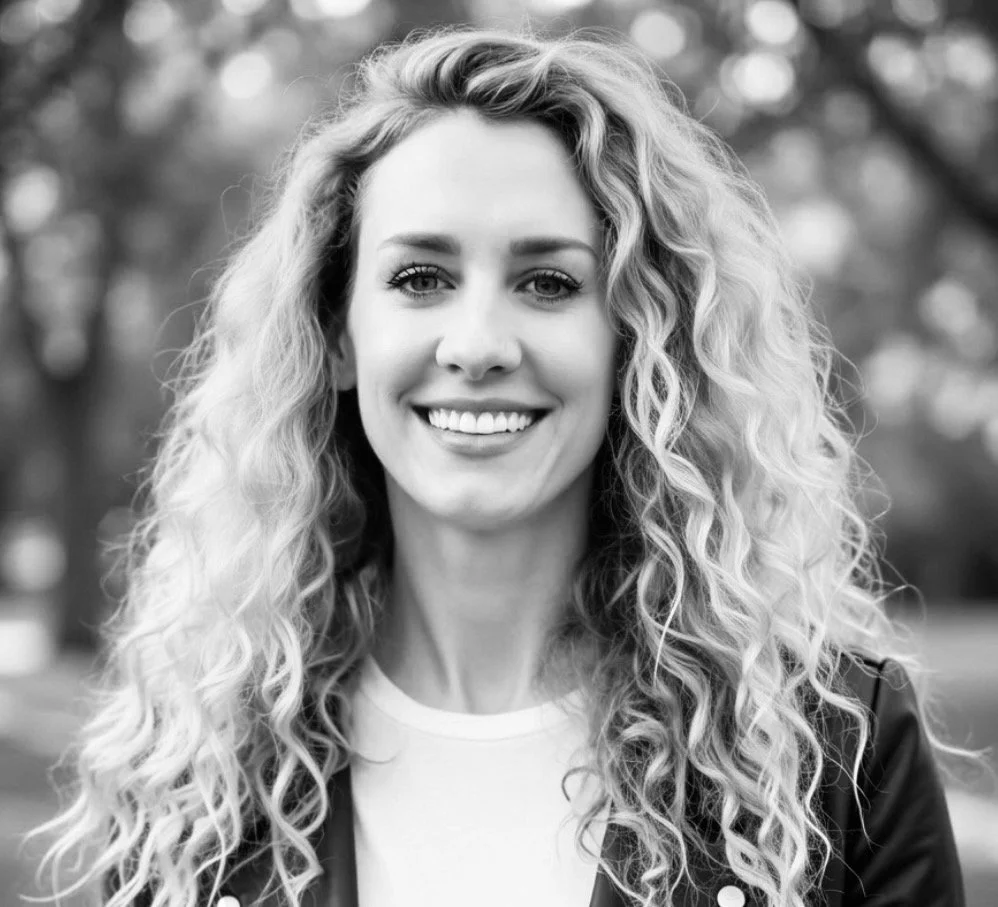
I’m a licensed psychotherapist and Advanced-Level Somatic Experiencing® Practitioner. I work with adults across New York and Washington State, via telehealth.
Before building my private practice, I worked across a range of clinical settings. I trained within a large integrative group practice in New York City, working alongside clinicians across specialties and building a broad foundation in trauma, mood, and relational work. Later, I worked in a smaller practice serving the Catskills region — a more intimate setting that deepened my sense of what close, sustained clinical relationships can hold. During that time, I also provided clinical support to a community crisis organization in the Hudson Valley, working alongside case managers on the front lines of crisis intervention and acute human distress. And I spent time on the Navajo Nation — Working through an established practice there, with clients who engaged in somatic work through informed consent. This deepened my understanding of ancestral and historical trauma in ways that continue to shape how I listen, and it reinforced for me that somatic work — when offered with humility and care — can cross significant cultural distances; an experience that shaped my understanding of historical trauma, embodied healing, and the limits and possibilities of Western therapeutic frameworks.
Frequently Asked Questions
-
For many of my clients, it does differ from traditional talk therapy, which often works at the level of narrative and meaning. Somatic work goes underneath that — into the patterns your body is still running. If previous therapy has helped you understand your patterns but hasn’t shifted them, this is often the layer that’s been missing.
-
Yes — and for many trauma clients, it can actually work better this way. People who have experienced trauma often find they can only truly drop in when they feel safe and familiar with their surroundings. Being in your own home — your own chair, your own light, your own space — can make it easier to access the very states we’re trying to work with, rather than having to arrive somewhere unfamiliar and regulate all over again before the session even begins.
The heart of SE is attunement: tracking what’s alive in the body and following it with care. That doesn’t require physical proximity. Over video, I’m attending closely to what I can observe — breath, posture, micro-shifts in expression — and I’ll often pause to gently ask what you’re noticing on your end. But you are always the primary guide to your own body. I work as a companion in that listening, not as the authority on your experience.
This is also something AI is structurally unable to offer: a trained, embodied presence attending to your nervous system in real time, across whatever distance separates us.
-
What distinguishes this practice is the combination of full clinical licensure and advanced somatic training. As a Licensed Mental Health Counselor, I'm trained to assess, diagnose, and treat mental health conditions — which means the clinical picture is held alongside the somatic work during ongoing therapy sessions. This foundation shapes how I understand what's presenting, what level of care is appropriate, and how to work safely with complexity and acuity.
Layered onto that is the Advanced-Level Somatic Experiencing® certification — widely considered the gold standard for this work, requiring a multi-year program of six intensive modules and extensive personal nervous system work. The two trainings together create something distinct: a practice that can go as deep somatically as the work requires, with the full clinical grounding to hold whatever arises.
-
I’m a career changer. Before psychotherapy, I worked in architecture and design-a field I appreciated for its attention to form, space, and how environments shape human experience. That way of seeing things followed me into clinical work. The body, like a building, has a structure, a history, and a logic. Understanding how it was shaped is part of understanding how it can change.
My path shifted after a severe traumatic brain injury that sent my nervous system into profound dysregulation — panic, chronic activation, a body that felt nothing like home. I sought out many forms of therapy. What finally moved the needle was somatic work, specifically Somatic Experiencing.
Training in SE myself — and doing the extensive personal nervous system work the training requires — deepened my understanding of this approach in ways that no amount of reading could have.
I also bring a research background: during graduate training at Northwestern University, I worked in a neuroscience integration lab contributing to research on the nervous system and psychological healing. That combination of lived experience and scientific grounding is the foundation I come from.
-
Yes — SE is complementary to a wide range of other approaches, which is one of the things that makes it a strong foundation for integrative care.
SE is also increasingly used in conjunction with EMDR, ketamine-assisted therapy and psychedelic-assisted therapy — either as preparation, integration support, or both. These experiences can open somatic and emotional material that benefits enormously from the kind of slow, body-based processing SE offers. If you’re working with a ketamine or psychedelic provider and looking for an integration therapist, this work is well suited to that.
More broadly, SE tends to complement rather than compete with whatever else you’re doing — whether that’s other bodywork, movement practices, mindfulness traditions, or healing modalities outside the Western clinical frame. If you’re already engaged in something that supports your nervous system and you’re wondering whether this work fits alongside it, that’s worth a conversation.
-
I don’t see children or adolescents (I work with adults 18+ only).
-



Investment
The depth of this work is part of what makes it valuable. The fees reflect the level of training and the kind of clinical attention this work asks for.
Ongoing therapy
$225 / 50-minute session
Weekly somatic-trauma therapy, including the initial intake. I provide superbills for clients with out-of-network mental health benefits, to help meet your deductible.
✦ ✦ ✦
Short-term Somatic Experiencing intensive
$275 / session, 4-session minimum
A focused, structured arc for adults working through a specific traumatic incident. Out-of-pocket only.

Contact
If you feel called to begin or deepen your healing journey, I invite you to connect.
All services are provided through secure, HIPAA-compliant platforms to ensure your privacy and confidentiality.
This is not a crisis line. If you are in crisis or having thoughts of harming yourself, please call or text 988 (Suicide & Crisis Lifeline) or go to your nearest emergency room. I do not respond to messages outside of business hours and cannot provide emergency support.